



Artist: Jacques-Louis David
Year: 1787
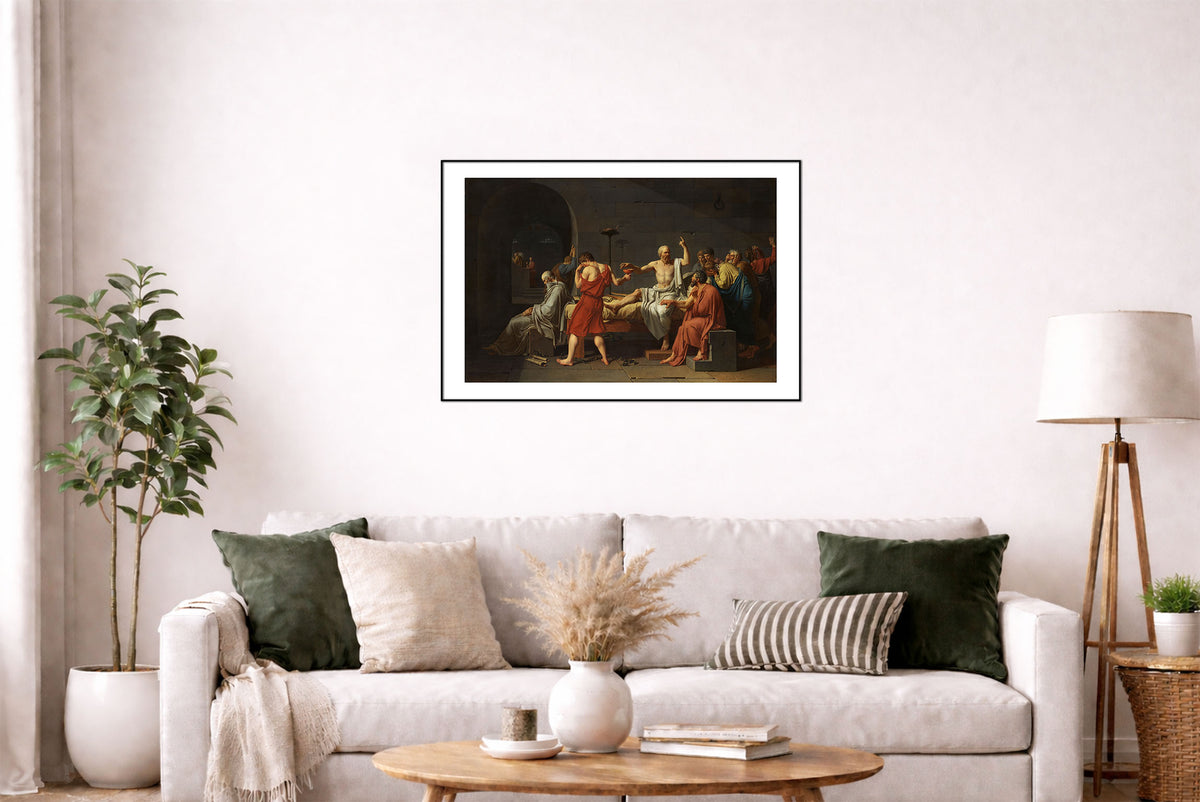
This is a reproduction print of the famous historical painting “The Death of Socrates” (La Mort de Socrate), created by Jacques-Louis David in 1787. One of the masterpieces of Neoclassical painting, the artwork depicts the final moments of the ancient Greek philosopher Socrates in 399 BC, as he prepares to drink a cup of poisonous hemlock following his condemnation by an Athenian court. The original painting is housed at The Metropolitan Museum of Art in New York City.
The dramatic scene portrays Socrates seated on his prison bed, calmly reaching for the cup of poison, while raising his other hand in a gesture of philosophical instruction. Surrounded by grieving friends and disciples, the philosopher remains composed and determined to uphold his principles. Among the figures is Plato, depicted as an elderly man seated at the foot of the bed, despite having been much younger at the time of Socrates' death.
David's composition is particularly remarkable for its powerful contrast between philosophical conviction and human emotion. While Socrates maintains an upright posture and unwavering expression, his companions display grief, despair and disbelief. The painting's classical architecture, carefully arranged figures and dramatic lighting reinforce the moral seriousness of the scene, reflecting the ideals of reason, virtue and sacrifice associated with Neoclassical art.
Painted in oil on canvas, the original artwork measures approximately 129.5 × 196.2 cm. Inspired by accounts of Socrates' final hours, particularly Plato's Phaedo, David transformed an ancient philosophical narrative into a universal statement about intellectual freedom, moral courage and loyalty to one's beliefs. The painting remains one of the most celebrated representations of Ancient Greek philosophy in European art.